The Micromobility Policy Notebook
Do emerging transportation challenges require new regulations, or better questions? This first entry in the Micromobility Policy Notebook explores the assumptions that shape policy and the outcomes those policies seek to influence.
ENTRY 1: THE INTRODUCTION
It looks like the Grinch may have stolen Christmas a little early this year.
Recently, Consumer Reports tested thirteen electric scooters and concluded that it could not recommend any of them.
For many readers, the implication is obvious.
The devices must be unsafe.
The next step often feels equally obvious.
Do something.
Regulate them.
Restrict them.
Control them.
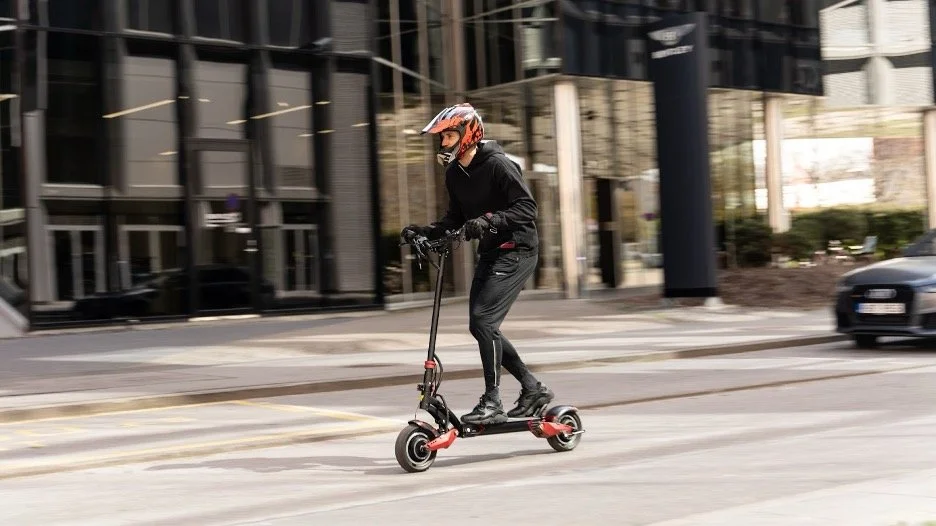
The sequence is familiar because transportation has seen it before.
An emerging technology appears.
People are injured.
News stories follow.
Concern grows.
Policymakers are asked to respond.
A century ago, similar conversations surrounded the automobile and rising pedestrian fatalities.
The vehicles were different.
The headlines were different.
The underlying questions were remarkably similar.
What is causing the problem?
Who is responsible?
What should be done?
THE REGULATION REFLEX
Students of transportation history remind us that today's challenges are not entirely new.
Transportation historian Peter Norton frequently points to the early debates surrounding automobiles and pedestrian safety as a reminder that societies have long struggled to adapt when new technologies disrupt established norms.
Consider the issue of jaywalking.
A new technology emerges.
Concerns rise.
The public expects a response.
Policy follows.
A century later, the conversation remains relevant.
That alone suggests the relationship between safety concerns, public behavior, and policy responses may be more complicated than any single intervention can resolve.
We would be wise to learn from the past if regulation is to play a meaningful role in the future of micromobility policy.
Transportation repeatedly finds itself confronting the same challenge:
How do we respond when a perceived risk emerges and the path ahead seems unclear?
That question sits at the center of today's micromobility conversation.
When safety concerns emerge, a predictable conversation begins.
Raise the minimum age.
Lower allowable speeds.
Require helmets.
Increase enforcement.
Restrict operating areas.
Ban certain devices.
Pass a new ordinance.
Do something.
The appeal is obvious.
Regulation is visible.
It demonstrates responsiveness.
It signals concern.
It communicates leadership.
Whether it changes outcomes is a separate question.
Yet one question often receives far less attention:
What exactly is the regulation intended to accomplish?
WHAT PROBLEM ARE WE TRYING TO SOLVE?
Many regulations are justified in the name of safety.
That sounds straightforward.
In practice, safety can mean very different things.
Fewer crashes?
Fewer injuries?
Less severe injuries?
Reduced conflicts?
Greater compliance?
Improved public confidence?
Greater acceptance of an emerging technology?
Different goals may require different solutions.
Before evaluating a regulation, it seems reasonable to understand which outcome we expect to improve.
THE HARDER QUESTION
Even after we identify the problem, a second question remains.
Will the proposed regulation actually produce the intended outcome?
Suppose a community raises the minimum age.
What behavior should change?
Suppose a speed limit is reduced.
What outcome should improve?
Suppose enforcement increases.
What risk is expected to decline?
Most importantly:
What leads us to believe the intervention will help?
The reality is that transportation systems are complex.
Behavior is shaped by infrastructure.
Technology.
Education.
Enforcement.
Social norms.
Risk perception.
Regulations may influence those factors.
They may not.
Sometimes they create entirely new consequences that were never anticipated.
LOOKING BACK TO LOOK FORWARD
One of the benefits of transportation history is that it allows us to revisit past efforts and evaluate what happened.
Transportation has spent decades attempting to improve pedestrian safety.
Infrastructure has changed.
Vehicles have changed.
Regulations have changed.
Public awareness has changed.
Yet many safety challenges remain.
That does not mean action failed.
It does suggest that the relationship between concern, regulation, and outcomes is often more complicated than we first assume.
Perhaps micromobility deserves the same level of humility.
Instead of immediately asking:
"What regulation should we adopt?"
Perhaps we should first ask:
"What outcome are we trying to influence?"
Then:
"What leads us to believe this action will help us get there?"
INTRODUCING THE MICROMOBILITY POLICY NOTEBOOK
What felt like a continual examination of micromobility policy ultimately led to the publication of Between Two Points.
This topic will not be the sole enterprise of this publication.
Instead, it will remain an ongoing conversation.
An examination of policy.
An exploration of assumptions.
A record of lessons learned along the way.
Micromobility policy is a well we will return to regularly, for as long as the subject remains worthy of examination.
Some entries may explore a specific policy.
Others may examine objectives.
We may confront seemingly impossible barriers.
Dissect individual policy components.
Or test the assumptions that support a particular intervention.
In all likelihood, there will be few definitive answers.
The issue remains complex, emergent, and uncertain.
That is precisely why it deserves continued attention.
For micromobility policy, the answers may begin with two surprisingly simple questions:
1) What problem are we actually trying to solve?
2) What leads us to believe this intervention will help?
With this, we close the first entry in an ongoing investigation.