Driving Distraction
Is distracted driving a behavioral failure, or a symptom of a world competing relentlessly for our attention? A closer look at the transportation story beneath the data.
A View Behind the Wheel
The light turns green.
You're second in queue and already running behind.
The driver in front of you doesn't move.
You tap the horn.
The light turns yellow.
Their vehicle lurches forward.
The light turns red just as they enter the intersection.
Another cycle.
Another delay.
More time spent waiting.
At least today's podcast is good.
Sound familiar?
There's a good chance you've been behind this driver before.
There is also a good chance that you've been that driver.
Conventional wisdom suggests distraction.
Could the reasons be more complex?
When the Insurance Institute for Highway Safety (IIHS) recently published research suggesting cellphone use prior to crashes is significantly underreported, the findings were unsurprising. Using telematics data, the study found cellphone activity before crashes appeared far more often than police crash reports indicated.
What's surprising is that we continue to treat quantification of this reality as though it were a novel observation.
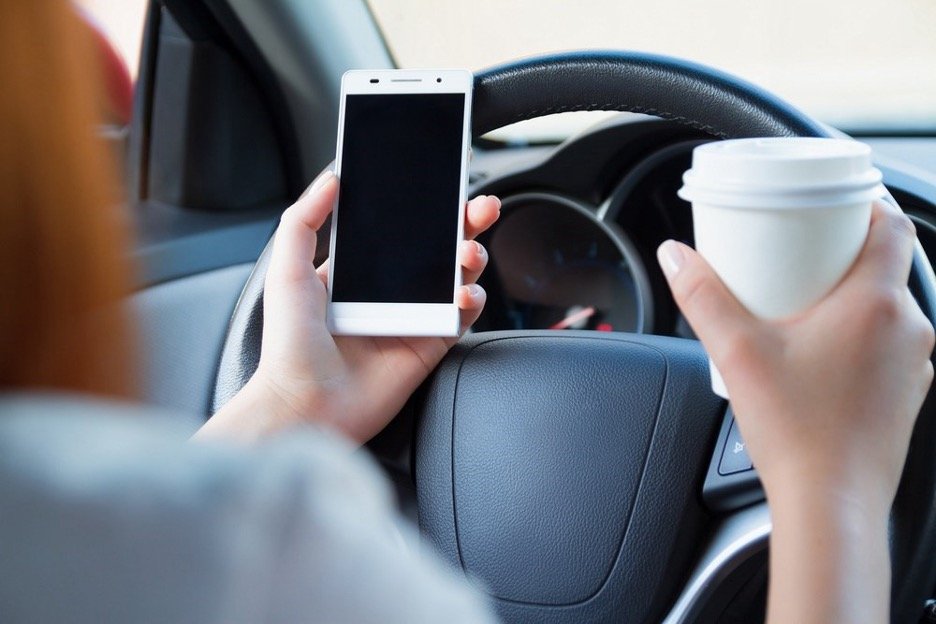
Let's rewind.
When distracted driving enters the public conversation, we often blame the smartphone.
But prioritizing a secondary task over driving is not a new phenomenon.
Before touchscreens, we talked on the phone.
We engaged the occupants in our vehicle.
We fumbled with cassette tapes and CDs.
We tuned the radio.
We drank coffee.
We ate fast food.
Some people even read the newspaper.
The tools have changed.
The behavior has not.
Are we really confronting a new reality?
Or are we simply observing an old human behavior through a modern lens?
Most discussions stop there.
Drivers are distracted.
Drivers need to pay attention.
Drivers need to put the phone away.
All true.
Yet I find myself asking a different question.
Is the driver distracted?
Or is driving a distraction from life?
Americans spend a remarkable amount of time in their vehicles.
Commuting.
Running errands.
Picking up children.
Traveling between destinations.
For many people, transportation represents one of the largest ongoing claims on both their time and attention.
And that time has to come from somewhere.
Family.
Friends.
Work.
Hobbies.
Rest.
Life.
The trip itself is rarely the reason people got out of bed that morning.
Driving is often the cost of reaching the thing they need or care about.
That distinction matters.
We often describe distracted driving as a failure of attention.
Perhaps it is equally a consequence of attention being in demand.
Modern life competes relentlessly for our attention.
Messages.
Notifications.
News.
Videos.
Social media.
Work.
Relationships.
Entire industries are built around capturing and holding our focus.
Then we place people in an activity that may consume hours of their week and expect complete resistance to those forces.
The result should not surprise us.
None of this excuses distracted driving.
Distraction creates real risk.
The IIHS research suggests the problem may be larger than traditional reporting indicates.
Yet the larger lesson may extend beyond safety.
Transportation professionals often focus on behavior because behavior is visible.
The phone is visible.
The distraction is visible.
The crash is visible.
The harder task is understanding the conditions that produce the behavior.
Perhaps that is where the more important conversation begins.
There may be a deeper transportation story hiding here.
If travel increasingly consumes time people would rather spend elsewhere, what role do our transportation systems, development patterns, and community design play in cultivating the conditions for distraction in the first place?
That is a conversation for another day.
Shifting Gears
The IIHS findings suggest distracted driving may be more common than traditional reporting indicates.
Yet the larger lesson may be that attention itself has become one of transportation's most contested resources.
We often treat distraction as a behavioral failure.
Increasingly, it may be a predictable response to a world competing relentlessly for our attention and a transportation system that demands so much of our time.
The value of time may be the real story.
Distraction is simply one of the ways that tension reveals itself.
This is where the real work begins.
Understanding behavior is important.
Understanding the conditions that produce that behavior may be even more important.